

Zepbound is the first medication the FDA has approved to treat obstructive sleep apnea. The approval is for adults who have obesity and a diagnosis of moderate-to-severe OSA, and the medication is used alongside a reduced-calorie diet and increased physical activity.
If you have OSA, suspect you might, use PAP therapy, or have heard about tirzepatide, this approval changes what you can ask about at your next appointment.
Zepbound, whose active ingredient is tirzepatide, is the first drug approved by the FDA for obstructive sleep apnea. Before this approval, no medication carried an OSA indication, and treatment rested on PAP therapy, oral appliances, surgery, and weight management.
The approval is specific. It applies to adults with obesity and moderate-to-severe OSA, meaning frequent breathing interruptions during sleep, and it belongs to branded Zepbound rather than to tirzepatide in general. The FDA based the decision on two clinical trials, called SURMOUNT-OSA, that tested tirzepatide in exactly this population. The approved use also includes a reduced-calorie diet and increased physical activity, so the medication is one part of a treatment plan rather than a stand-alone fix.
No. Mounjaro and Zepbound contain the same active ingredient, tirzepatide, but only Zepbound carries the United States indication for obstructive sleep apnea. Mounjaro's label in the United States is for type 2 diabetes.
The shared ingredient causes real confusion, so the distinction matters. When a prescription goes to an insurer, the plan reviews the diagnosis and the indication submitted with it, and those are tied to the specific brand and its approved label. Because Mounjaro's label does not include OSA, a plan's decision about Zepbound for sleep apnea says nothing about whether that plan would cover Mounjaro for the same purpose. Coverage for one brand cannot be inferred from the other's approval. If your prescriber and your insurer are working from the OSA indication, the conversation needs to be about Zepbound by name.
The approved population is adults who have obesity and a diagnosis of moderate-to-severe obstructive sleep apnea. Both parts of that description have to be present: the obesity criterion and an established OSA diagnosis at the moderate-to-severe level.
This means the approval does not extend to everyone who snores, feels tired during the day, or suspects sleep apnea, and it does not cover people with OSA who do not have obesity. It also does not apply based on symptoms alone, no matter how strongly those symptoms suggest OSA.
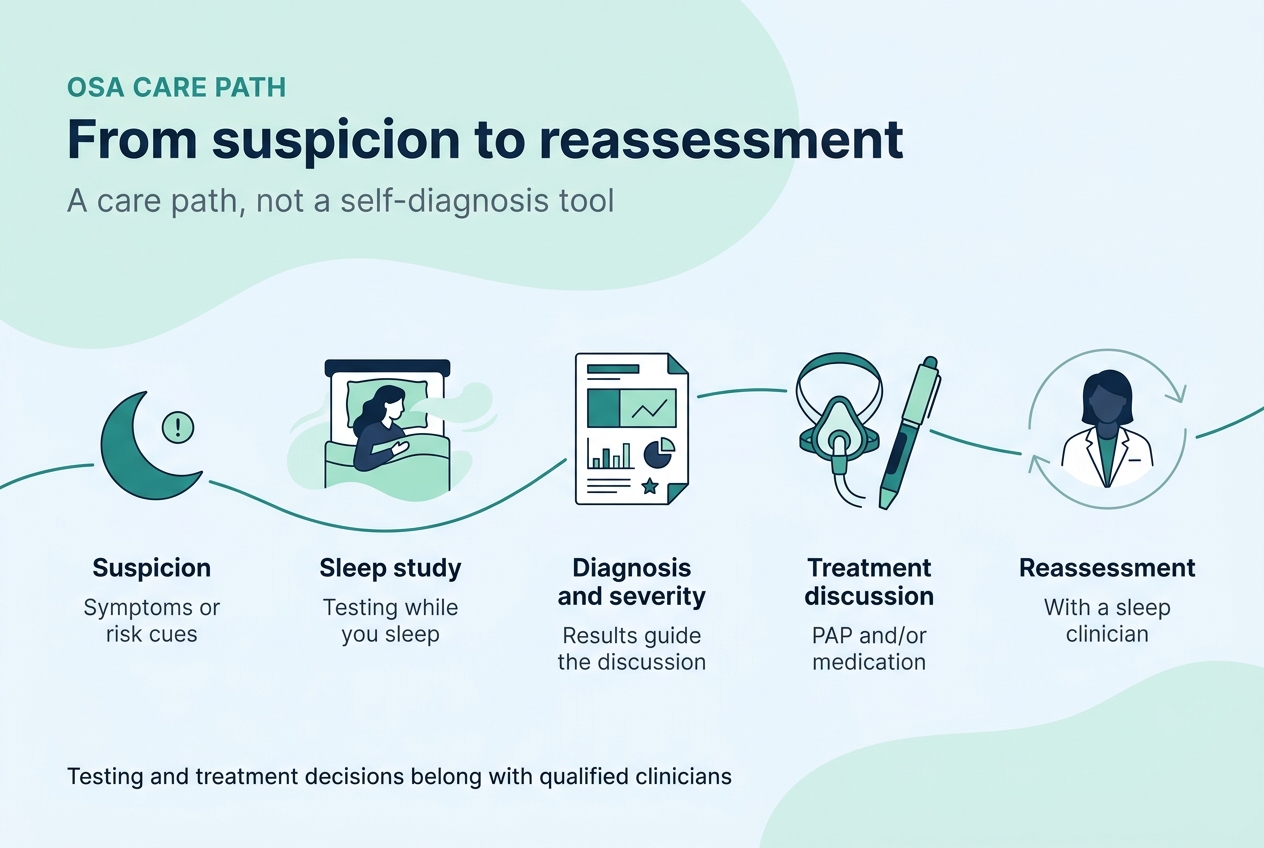
Symptoms such as loud snoring, witnessed pauses in breathing, morning headaches, and daytime sleepiness can point toward OSA, but they cannot confirm it or show how severe it is. Only a sleep evaluation with testing can do that. Sleep testing measures how often your breathing is interrupted per hour of sleep, which is how clinicians determine whether OSA is present and whether it falls in the moderate-to-severe range.
So the practical sequence is: symptoms or suspicion lead to a sleep evaluation, the evaluation produces a diagnosis and severity, and only then can a prescriber determine whether you fit the approved population. If you have not had a sleep study, getting one is the first step rather than a formality.
The two SURMOUNT-OSA trials found that tirzepatide sharply reduced the number of breathing interruptions people with obesity and moderate-to-severe OSA experienced during sleep, compared with placebo. The two studies answer slightly different real-world questions: one involved people who were not using PAP, and the other involved people who planned to keep using it.
The trials measured the apnea-hypopnea index, or AHI, which counts how many times per hour of sleep breathing is interrupted. A lower AHI means fewer interruptions and less severe OSA.
If you cannot tolerate PAP, study 1 is the closer match to your situation. If you use PAP and plan to continue, study 2 is the relevant one. Both showed a large advantage for tirzepatide, with a somewhat bigger average reduction in the group planning to continue PAP.
Beyond the average AHI change, the trials tracked how many people reached specific improvement thresholds. Two are worth understanding.
A 50% response means a person's breathing interruptions were cut by at least half. The share reaching that threshold:
A remission or mild nonsymptomatic result means testing showed the sleep apnea had eased to the point of being mild or no longer meaningfully present, without symptoms. The share reaching that endpoint:
These were defined trial endpoints, not promises. Reaching the remission or mild nonsymptomatic threshold in a study does not guarantee that any individual will reach it, and it does not by itself change anyone's treatment plan.
Weight change was also substantial. Average body weight fell by 17.7% with tirzepatide versus 1.6% with placebo in study 1, and by 19.6% versus 2.3% in study 2. Since excess weight contributes to airway obstruction during sleep, weight loss is part of how the medication is understood to help. Individual results vary: trial averages describe groups, and your own weight and OSA response may be larger, smaller, or different in timing.
No. Zepbound does not replace PAP therapy, and starting the medication is not a reason to stop using your machine on your own.
One of the two pivotal trials was conducted in people who planned to continue PAP, which tells you the approval was built around medication working alongside existing care rather than instead of it. Current sleep-medicine guidance calls for coordination between your prescribers and for reassessment of your OSA severity and symptoms as treatment progresses. In practice, that means your sleep clinician is the one who evaluates whether your breathing has improved enough to revisit your PAP settings, your pressure, or whether you still need the device at all. Those decisions come from follow-up evaluation, often including repeat sleep testing, not from the prescription itself.
Many people find the mask genuinely hard to live with night after night, even when they understand why it helps. If PAP has been difficult for you, that experience is worth raising with your sleep clinician rather than acting on alone. The trial results in people unable or unwilling to use PAP are encouraging, but they describe study averages, and your own plan still needs to be set with the clinician managing your sleep care.
The most common side effects are gastrointestinal: nausea, diarrhea, vomiting, and constipation. These are frequent enough that you should expect the possibility of them and plan to discuss how they are managed if they appear.
Beyond the common effects, tirzepatide carries major warnings and contraindications that make it unsuitable for some people. Which of those apply to you depends on your personal and family medical history and your other medications, so safety is an individualized determination that no article can settle for you. A qualified prescriber needs to review your history before deciding whether tirzepatide is appropriate, and you should report new or worsening symptoms once treatment begins.
There is no universal answer. Coverage for Zepbound under the OSA indication depends on your specific plan, and approval by the FDA does not obligate any insurer to pay for it. Since January 2025, Medicare drug plans can cover Zepbound when it is prescribed for the OSA indication because the weight-loss-only exclusion does not apply to that use, though individual plans still apply their own criteria and prior authorization. Without coverage, the Zepbound list price is $499 to $1,086.37 per fill depending on the form, and manufacturer savings programs can lower the cost for some people with commercial insurance. If a plan denies coverage, you can ask the prescriber to support an appeal or a prior-authorization resubmission with the sleep study and severity documentation. What you can do is verify rather than assume. Three actions get you a real answer:
If you have already started the process, a denial can turn the next refill into an immediate out-of-pocket decision rather than a distant possibility. Getting these answers before a prescription is written saves you from learning about a denial after the fact.
Two clinicians have distinct roles. A qualified prescriber evaluates whether tirzepatide is suitable for you, weighing your medical history, the obesity criterion, and the safety considerations. Your sleep clinician confirms your OSA diagnosis and severity, manages every PAP decision, and coordinates reassessment of your breathing and symptoms over time. For many people these are different providers, and the approval works best when both stay informed.
August 11, 2026