


The routines that create real progress usually aren’t built on motivation. They’re built to keep working even on the days when motivation disappears completely.
When you think of a successful routine, it probably means waking up energized, perfectly prepared, and ready to make healthy choices every single day. In reality, it just doesn't always work that way. Some days you’re motivated and focused and other days you’re tired, stressed, overwhelmed, busy, emotional, or simply not in the mood to do any of it. That’s normal. The problem is that so many routines are built only for the “best case scenario” version of you. That highly motivated, energetic, and perfectly organized version.
Then life happens, and the routine falls apart the second things feel difficult. This is why sustainable routines have to be built differently. They have to work on regular days, stressful days, low-energy days, and messy days too. The goal is never to be perfect here, it’s creating systems that are realistic enough to continue even when you don’t feel like showing up. And that’s where consistency actually starts.

Motivation comes and goes constantly. You might feel incredibly committed on Monday and completely exhausted by Thursday. That doesn’t mean you’re failing. It means you’re human. The people who stay consistent long term usually aren’t relying on motivation every day. Why? Because waiting around for motivation to come will likely get you nowhere. Motivation comes by action. So you'll need to rely on systems that reduce the amount of decision-making required. This way, you have the energy to take action.
When healthy habits are already built into your day, you spend less time debating whether or not you should do them. You simply follow the structure you already created. That’s why routines matter so much. They help carry you through the moments when feelings are inconsistent.
One of the biggest mistakes people make when building a routine is trying to overhaul everything at once.
They commit to meal prepping every meal, working out six days a week, drinking a gallon of water, walking 15,000 steps, and getting perfect sleep all at the same time. It feels exciting for a few days, but eventually it becomes exhausting to maintain. A better approach is to make your routine almost too manageable at first. Sounds crazy? We know, but just keep reading, it'll make sense.
Focus on a few consistent actions you can realistically repeat:
Small actions repeated consistently will always outperform extreme routines that only last a week.

The harder something feels to start, the easier it is to avoid. That’s why simplifying your environment can make a massive difference in consistency. If healthy choices require too much effort every single day, your routine will feel mentally exhausting very quickly.
Simple changes help remove that resistance:
The easier you make healthy habits to access, the more likely you are to follow through even on low-energy days.
A good routine creates structure without making you feel trapped. If your plan completely falls apart the second your schedule changes, it’s probably too rigid. Real life includes vacations, stressful weeks, family events, late nights, and unpredictable days. Flexibility matters.
This is where many people get stuck in that “all or nothing” mindset. They miss one workout, have one off-plan meal, or skip tracking for a day, and suddenly the entire routine feels ruined.
But consistency is not built through perfection. It’s built through returning to your habits quickly instead of turning one difficult day into a difficult month.
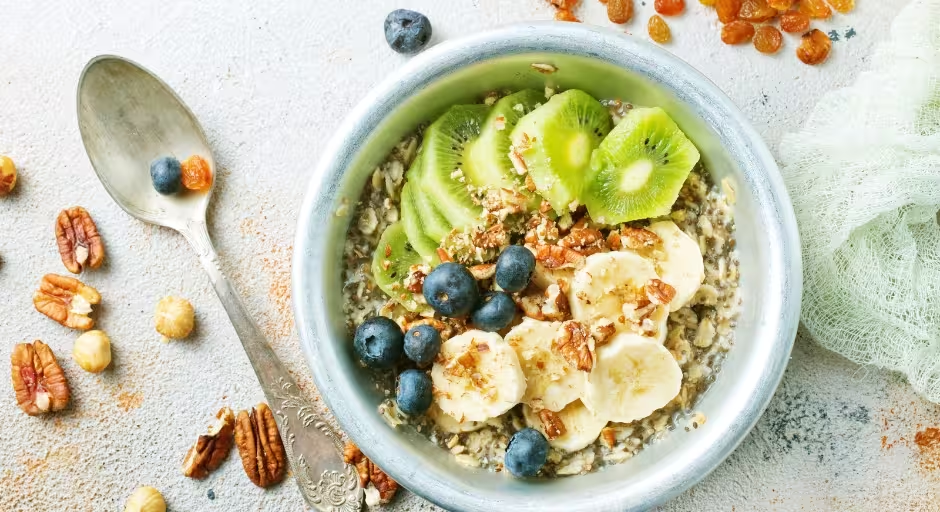
If you’re using GLP-1 medications through HealthiCare, routines still matter more than people realize.
The medication can absolutely help reduce appetite, quiet cravings, and make healthy choices feel easier. But even with that support, habits and structure are still what create long-term success. When appetite decreases, many people unintentionally become inconsistent with meals, protein intake, hydration, or movement simply because hunger cues are quieter. Without some kind of routine in place, it becomes easy to under-fuel or lose structure over time.
This is why HealthiCare focuses on more than just the medication itself.
With HealthiCare, you have licensed clinicians helping guide your progress while the Healthi app gives you the tools to stay consistent day to day. Using the BITE system, meal tracking, and structured plans like Healthi Fresh, you’re able to create routines that support protein intake, energy, and sustainable fat loss without overcomplicating your life.
The goal isn’t to create a “perfect” routine. It’s to create one that still works when life feels busy, stressful, or unmotivating.
The routines that create lasting results are, surprisingly, usually the least dramatic ones. They’re simple enough to repeat, flexible enough for day-to-day life, and supportive enough to keep going even when motivation fades. That’s what makes them sustainable.
You do not need to feel inspired every day to make progress. You need systems that make healthy choices easier to return to, even after imperfect days. That’s how consistency is built. Not through perfection, but through routines that continue working long after motivation wears off.
October 5, 2026